90-day priorities
90-day priorities name the few things the company must move forward next. They work when leaders can recite them without notes. They also work when the company can say what it has chosen to defer.
Operating system basics
A business operating system is a way of running a company, not the software that runs a computer. It is the routines, roles, metrics and decisions that let a company operate without the founder in every decision. I help founder-led companies build one through my 90-Day Scale-Up Operating System.

A business operating system is the agreed way a company sets priorities, runs meetings, measures results and assigns ownership.
The phrase borrows a computer term. A computer operating system coordinates hardware and programs so they work together. A business operating system coordinates people, work and information in a similar way.
Some software products also use the phrase for an all-in-one platform that connects sales, marketing and customer service. This article uses the management meaning. Software can support that system. It doesn't replace the decisions the system exists to make.
A business operating system can be described as doing four jobs. It sets direction, so people know what matters. It sets rhythm, so work is reviewed on a schedule. It also makes progress visible through measures and gives each outcome an owner who answers for it.
One practical test is to imagine the founder stepping away. Do priorities, meetings, reporting and decisions carry on? If they don't, the founder may be carrying the system alone.
A small company can run on the founder's judgment and memory. Growth strains both. The first pattern I work on is the founder as the bottleneck. Everything comes back to the CEO.
The second is a company that has outgrown its systems. Spreadsheets multiply, handoffs break and processes live inside people's heads.
Signs that a working operating system is missing include:

The Design phase of my 90-Day Scale-Up Operating System (weeks 3–4) produces eight outputs. Each maps to a working part of a business operating system, described here in general terms.
90-day priorities name the few things the company must move forward next. They work when leaders can recite them without notes. They also work when the company can say what it has chosen to defer.
Operating cadence is the fixed rhythm of meetings and reviews that keeps work moving. A weekly leadership meeting often anchors it, with a set agenda and recorded decisions.
A KPI dashboard shows the few measures leaders use to steer the business. Each measure needs an owner, a data source and a regular review.
An accountability structure states who owns which outcome and who each owner answers to. Clear ownership lets managers decide without escalating everything to the founder.
Process priorities pick which workflows to fix first. A company rarely has capacity to redesign everything at once. The list can follow the biggest sources of delay and rework.
Technology priorities decide which systems to keep, replace or connect. They follow the process priorities, as the process-first ERP article explains.
An AI opportunity map shows where AI could support the work. The AI readiness article covers a first pass.
Leadership responsibilities define what each leader owns and how leaders work together. They include which decisions a leader makes alone and which need a joint decision.
Operating cadence links the other parts into a weekly and quarterly loop. The loop is short enough to repeat and specific enough to check.
A weekly leadership meeting works better with a fixed agenda. The agenda can review the measures, check each priority, raise blockers, make decisions and record actions. It should focus on the company's priorities rather than status updates from every department.
A simple version of the loop runs in this order:
Some tools and documents get treated as a business operating system. Each covers one part of the job and leaves the rest open.
| Sometimes mistaken for | What it covers | What it leaves out |
|---|---|---|
| A software platform | Data, workflows and records in one place. | Priorities, decisions and ownership, which people still have to set. |
| A meeting schedule | When people meet. | What gets measured, who owns outcomes and how decisions are recorded. |
| A KPI dashboard | A view of the key measures. | The routine that reviews the measures and acts on them. |
| An organization chart | Reporting lines. | Who owns each outcome and how decisions flow. |
| Process documentation | How individual tasks are done. | Which processes matter most and who keeps them current. |
I work with founder-led companies to turn operational complexity into a scalable operating system. My 90-Day Scale-Up Operating System is my main product, and it runs in three phases.
I assess strategy, organization, leadership, processes, technology, revenue operations, KPIs, AI opportunities and founder bottlenecks. The Scale-Up Diagnostic is the deliverable. It is a concise executive assessment showing what is broken, why, what matters and what to fix first.
I create the eight parts described above. They are the 90-day priorities, operating cadence, KPI dashboard and accountability structure. They also include process priorities, technology priorities, the AI opportunity map and leadership responsibilities.
I help execute the plan. The work includes the weekly leadership meeting, KPI rhythm, process redesign, AI pilots and automation. It also covers team accountability, vendor management, technology decisions, hiring and organizational changes, and strategic initiatives.
Named frameworks for running a company exist, and some companies adopt one. A framework helps when it fits the company's size, industry and leadership style. It also helps when leaders keep using it.
Follow-through is where an operating system can quietly fail. A dashboard nobody reviews, a meeting that slips and a priority with no owner are early warnings.
A founder who overrides the agreed process can teach the team to ignore it. Leaders keep the system alive by using it themselves, especially when a decision feels urgent.
A first version can be small. It can rest on a few working parts:
A founder can struggle to own the operating system alone, because the system exists partly to relieve founder pressure. Senior operational leadership often carries the role.
The owner's job is to keep the system running. The meeting happens, the measures stay current and decisions are recorded and followed up.
Where a company lacks that leadership, a fractional COO can fill the gap. My Fractional COO engagement lists an operating system, a weekly leadership meeting and KPI management among its inclusions.
I work alongside the leadership team to understand how the business actually operates. Then I identify what is getting in the way of growth, build a practical plan and help execute it. For the wider role, read what a fractional COO does.
If you want to talk through your own company, start a conversation.
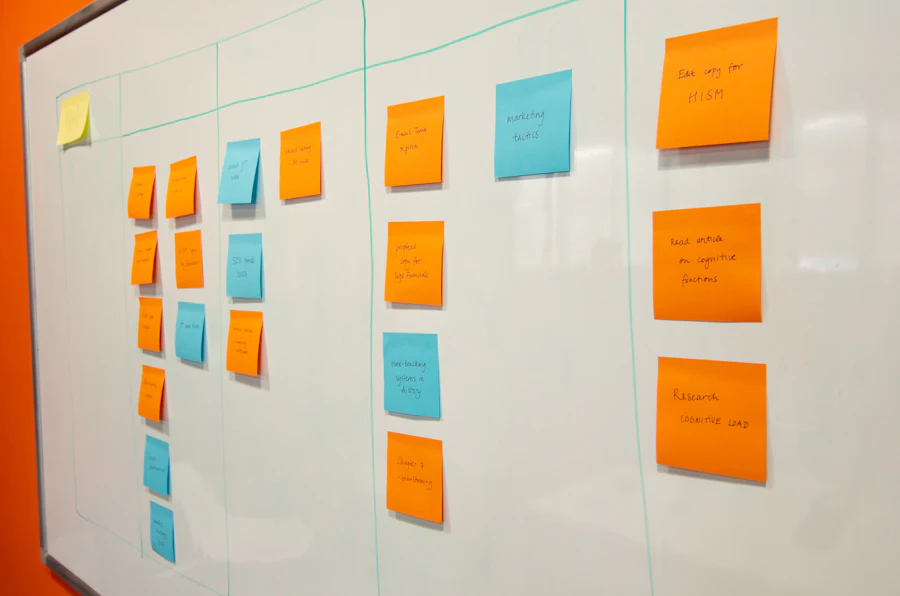
A business operating system is the agreed set of routines, roles, metrics and decisions a company runs on. It covers priorities, meeting rhythm, measures, ownership and process. It is a management system that sits above whatever software the company uses.
The components of a business operating system can be grouped as priorities, cadence, measures, ownership, processes and tools. In my Design phase, the outputs are 90-day priorities, operating cadence, KPI dashboard and accountability structure. They also include process priorities, technology priorities, an AI opportunity map and leadership responsibilities.
The time to set up a business operating system depends on company size and how much must change. No single duration fits every company. My method is a 90-day system: Diagnose in weeks 1–2, Design in weeks 3–4 and Implement in weeks 5–12. Habits can take longer to settle than a design does.
A small company can benefit from a business operating system once decisions, handoffs or reporting depend on one person's memory. A light version can suffice at first: a short priority list, a weekly meeting, a few measures and named owners. More structure can follow as the company grows.
An operating cadence is the fixed rhythm of meetings and reviews that keeps a company's work moving. It usually includes a weekly leadership meeting, a regular review of the measures and a quarterly reset of priorities. Cadence is one part of a business operating system.
In the management sense, a business operating system is different from software, though the two work together. Software holds the data, workflows and reports. The operating system is the routines, roles and decisions that people follow.



If your company has outgrown the way it operates, let's talk. The contact page is the place to start.
Book a conversation